Posted On Friday, October 26, 2018
By:
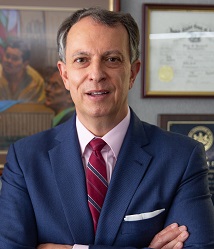
On November 9, 2018, John Schwab, co-chair of Pietragallo’s government enforcement group, will present to physicians and medical providers at The Pennsylvania Pain Society: 2018 Annual Meeting & Scientific Sessions in Bedford, PA. The presentation, “Overcoming the Fear of Prescribing: Defending Your Patient and Practice,” will discuss current trends in health care investigations and prosecutions. The presentation will also focus on government initiatives directly affecting prescribers of opioids and drug addiction medicine. More information on The Pennsylvania Pain Society conference can be found here.
The November 9 presentation is the most recent of Mr. Schwab’s presentations regarding health care fraud allegations, which include the following:
- “Government Investigations & Prosecutions – Focus: Opioid and Drug Addiction Treatment,” Pietragallo Law Firm (Monroeville, PA), June 12, 2018
- “Opioid Enforcement in 2018: DOJ, HHS, DEA, FBI – Who Does What?,” The New York State Pain Society: 2018 Annual Meeting & Scientific Sessions (West Harrison, New York), April 28, 2018
- “Health Care Compliance: Government Enforcement & Opioids,” Health Law Section, Allegheny County Bar Association (Pittsburgh, Pennsylvania), February 9, 2018
- “DOJ and DEA Opioid Enforcement in 2018,” The Pennsylvania Pain Society: Annual Meeting and Scientific Sessions (Hershey, Pennsylvania), December 10, 2017
- “Investigations & Compliance: What’s New in Government Enforcement and Internal Investigations,” Pietragallo Law Firm (Pittsburgh, Pennsylvania), October 25, 2017
- “Health Care Fraud Enforcement in the Trump Administration,” Association of Certified Fraud Examiners, Pittsburgh Chapter (Pittsburgh, Pennsylvania), October 11, 2017
More information on the Pietragallo firm’s expertise in Physician and Prescriber Defense can be found here.
Posted On Friday, October 19, 2018
What Happened?
On Wednesday, October 17, 2018, New York State’s district attorneys sued Governor Andrew Cuomo to invalidate, as unconstitutional, a law that would establish a new oversight body charged with curbing prosecutorial misconduct.
The Rundown
The suit, filed by the District Attorneys Association and the DAs from Albany and Queens Counties, challenges Article 15-A of Bill S2412D, which was signed into law in August and is scheduled to go into effect in January. The article would establish the Commission on Prosecutorial Conduct, an 11-member body charged with investigating and punishing misconduct. The commission, the first of its kind in the country, would be comprised of prosecutors, defense attorneys, and judges. The legislature would appoint six members; the governor would appoint two, and the chief judge of the Court of Appeals would appoint three. The body would have jurisdiction over all prosecutors and broad power to punish them, with sanctions up to and including removal. All determinations resulting in punishment would be reviewable by the Court of Appeals.
The plaintiffs claim that the law runs afoul of the New York Constitution in a variety of ways. First, it allows the legislature to intrude on the independence of elected executive branch officials, thus violating the separation of powers principle. Moreover, according to the plaintiffs, it is impermissibly vague regarding when the commission can investigate and upends the equal protection rights of prosecutors. Finally, it expands the powers of the Court of Appeals, in contravention of the constitutional provision that limits the duties of judges to those “reasonably incidental to the fulfillment of judicial duties.”
For the Record
Governor Cuomo, a staunch advocate for the bill, has called the bill necessary to ensure that prosecutors are meting out justice even-handedly. “When any prosecutor consciously disregards that fundamental duty, communities suffer and lose faith in the system, and they must have a forum to be heard and seek justice,” he said after the bill was signed.
The Take Away
Much rides on this litigation for New York, where the bill passed with strong bipartisan support, as well as advocacy groups like the Innocence Project and the Legal Aid Society, who hope that Article 15-A of Bill S2412D will serve as a model for other states.